
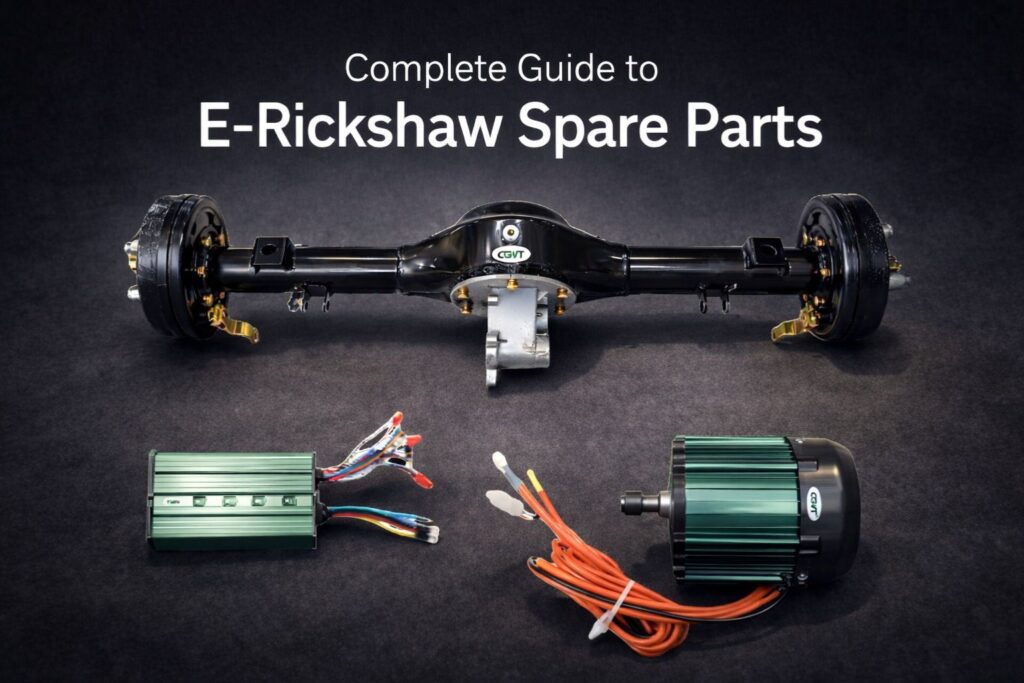
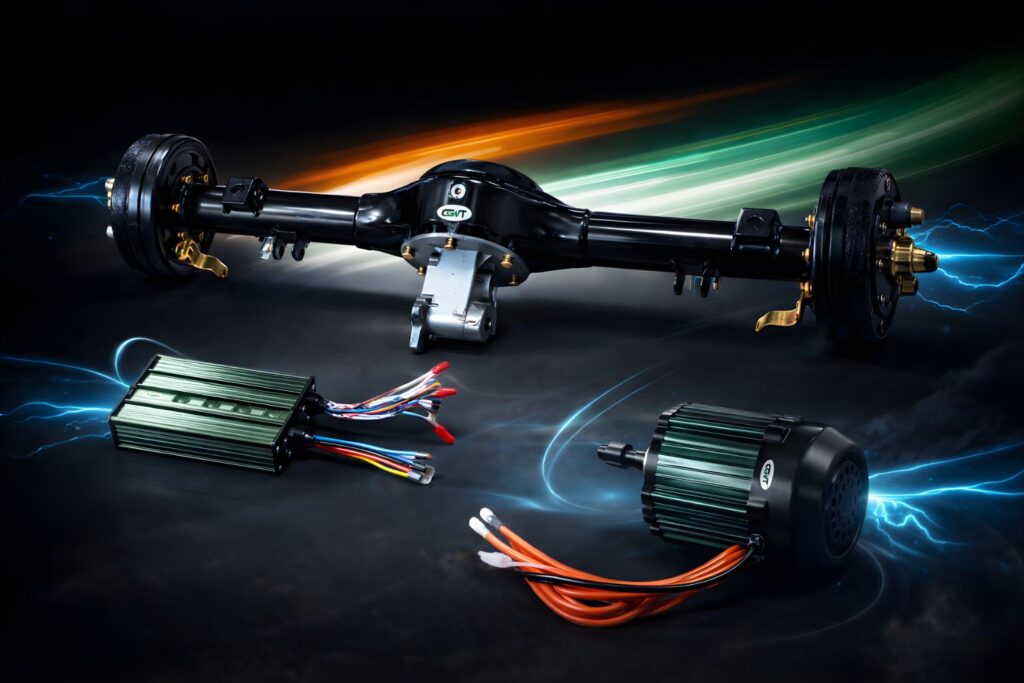
Your e-rickshaw is your livelihood. Every kilometre it runs reliably is money earned — and every breakdown is money lost. The secret to keeping your vehicle on the road, day after day, often comes down to one critical decision: choosing the right spare parts.
India’s e-rickshaw market has grown explosively over the past decade, with millions of vehicles now ferrying passengers and goods across cities, towns, and villages. But with that growth has come a flood of low-quality, counterfeit, and mismatched spare parts in the market. For fleet operators, individual owners, and mechanics alike, knowing how to select the right components is no longer optional — it is the foundation of vehicle longevity, passenger safety, and daily profitability.
In this guide, we walk you through a practical, component-by-component approach to choosing e-rickshaw spare parts that genuinely last — and explain what to look for, what to avoid, and how to make smart buying decisions for the long term.
Why the Right Spare Parts Matter More Than You Think
Many e-rickshaw owners fall into the trap of buying the cheapest part available when something breaks down. On the surface, this seems logical — keep costs down, get back on the road quickly. In reality, low-quality parts cost far more over time. They wear out faster, cause secondary damage to other components, reduce battery efficiency, and create safety hazards.
Consider a poor-quality motor controller: it may save you ₹500 today but cause irregular power spikes that degrade your battery pack within months — a replacement that could cost ten times more. Choosing quality parts from a reputable manufacturer is not an expense; it is an investment that pays back daily through fewer breakdowns, lower maintenance costs, and longer vehicle life.
💡 A well-maintained e-rickshaw running quality spare parts can easily deliver 5–7 years of dependable service, versus 2–3 years for vehicles maintained with substandard components.
The Key Components: What to Look for in Each
Let us go through the most critical spare parts category by category and outline exactly what quality looks like in each case.
| Component | What It Does & Why It Matters |
| Differential / Rear Axle | The backbone of power delivery. Must handle high torque without heat buildup or excessive noise. |
| Motor | Determines range, efficiency, and hill-climbing ability. Efficiency ratings and winding quality matter most. |
| Controller | The brain of the vehicle. Poor controllers damage batteries and cause erratic acceleration. |
| Digital Meter | Your dashboard window into vehicle health — speed, battery, and fault indicators at a glance. |
| Brake Shoes | Safety-critical. Must provide consistent stopping power even in wet or dusty conditions. |
| Throttle | Controls smooth power delivery. Hall-effect sensors outlast resistive types significantly. |
| Ignition Switch | A failure point that is easy to overlook. Cheap switches corrode and cause electrical faults. |
| Wipers | Essential for monsoon visibility. Quality wiper motors prevent unsafe driving conditions. |
1. Motor: The Heart of Your E-Rickshaw
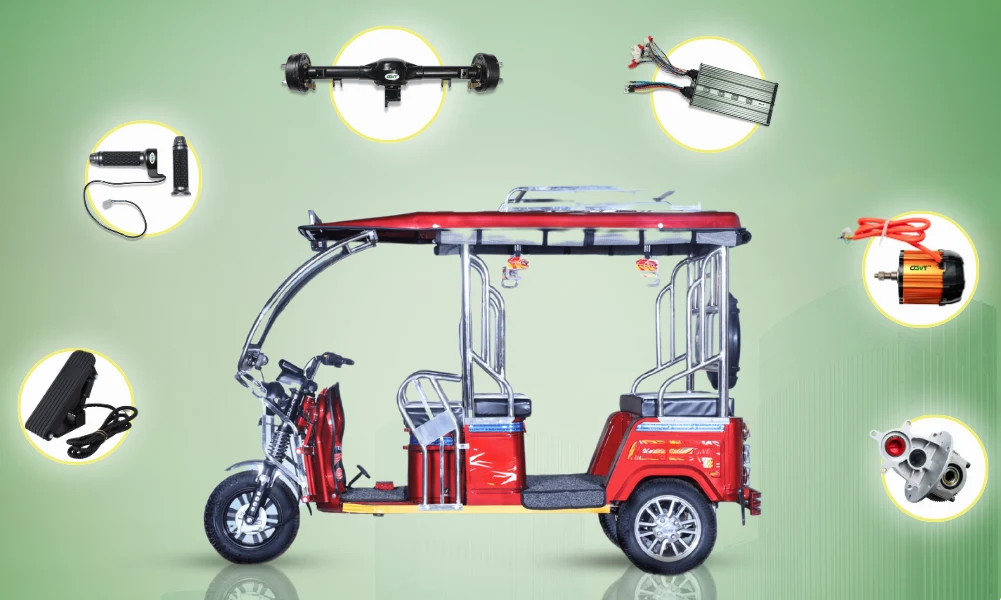
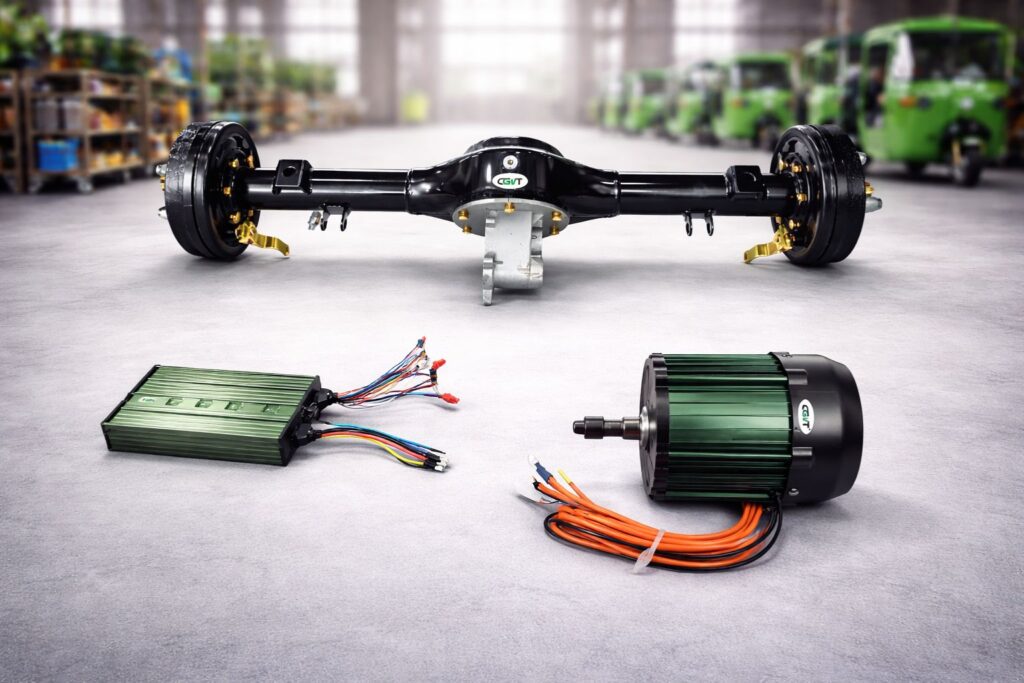
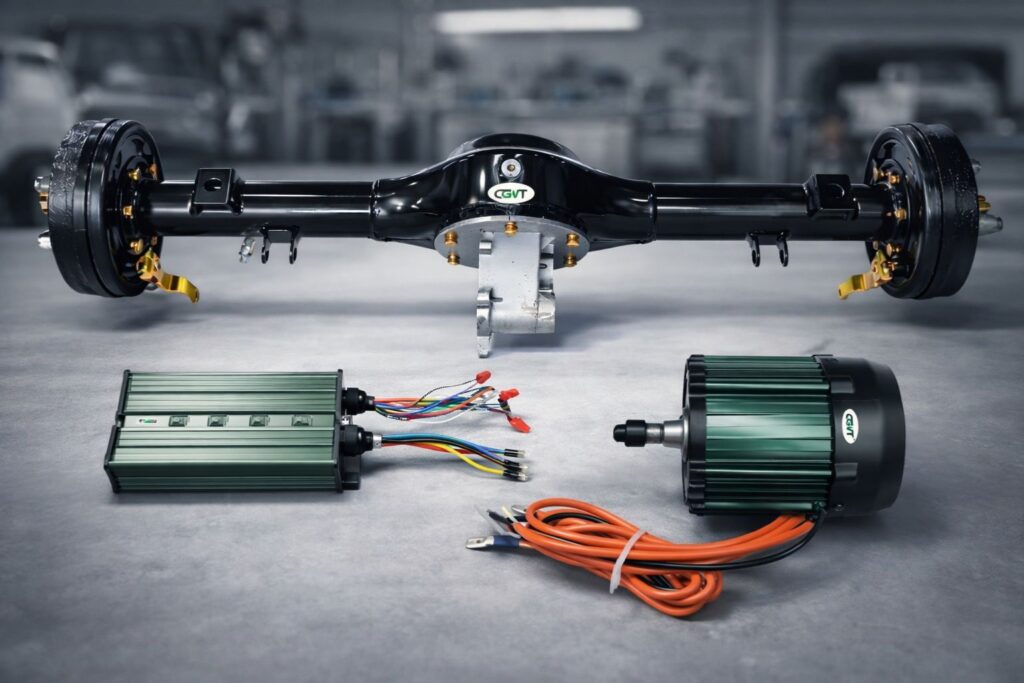
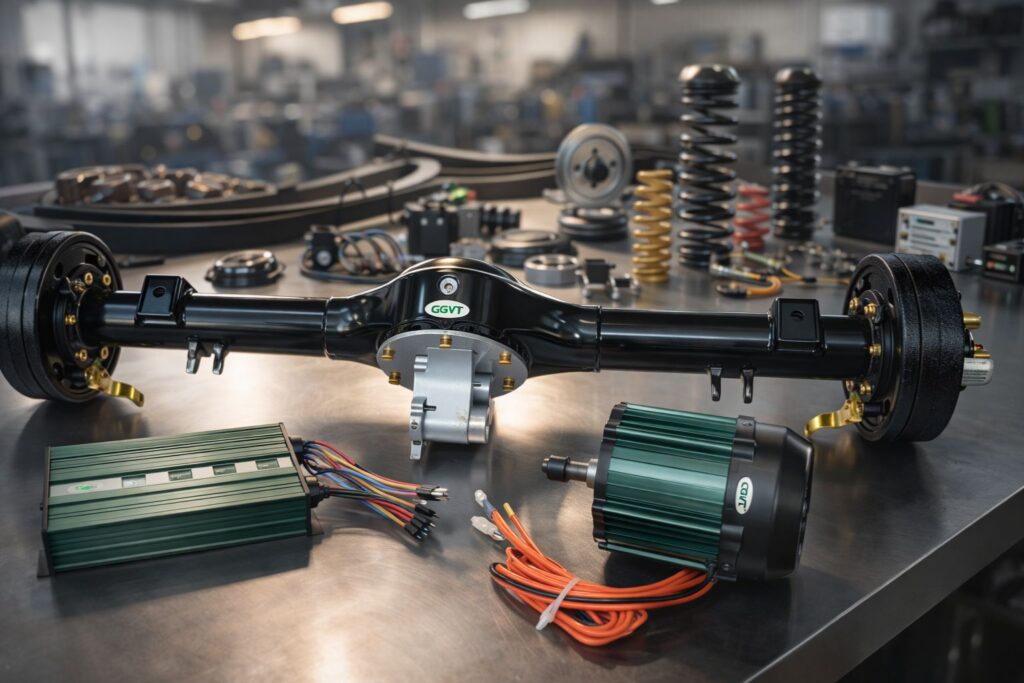
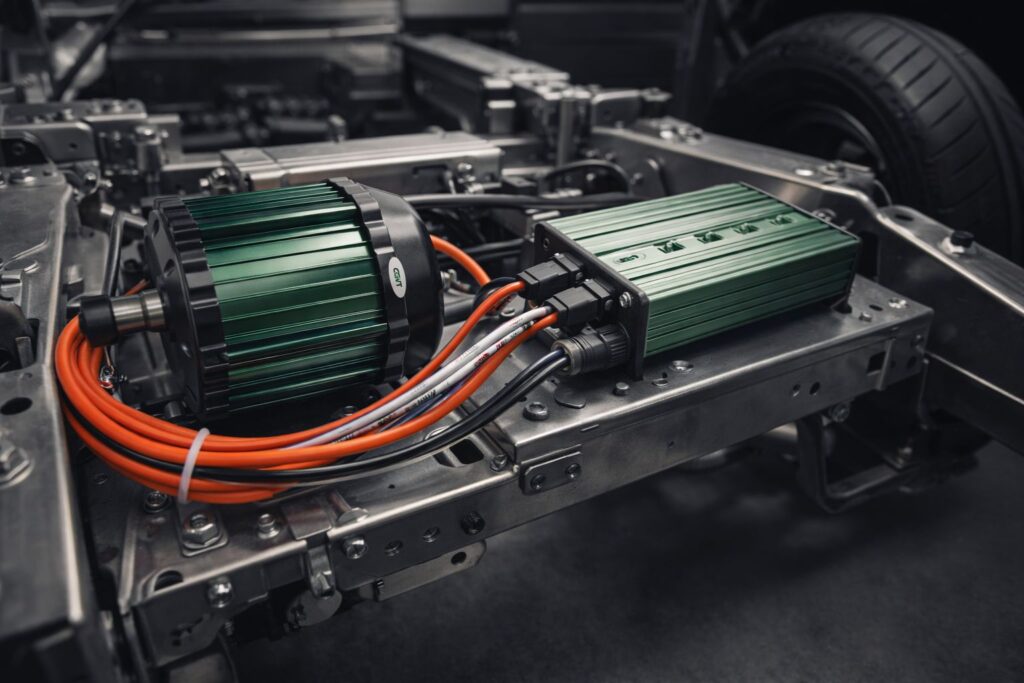
The motor is the single most important component in your e-rickshaw. When evaluating a replacement motor, focus on three things: wattage compatibility with your vehicle’s original spec, efficiency rating (look for motors offering 85%+ efficiency at rated load), and build quality of the windings and housing. A well-engineered motor — like those from CGVT — is designed with energy optimization and extended lifespan in mind, built specifically for the stop-and-go demands of Indian roads, not just laboratory conditions.
Always verify that the replacement motor matches your existing controller’s voltage and current specifications. Mismatched motors and controllers are one of the leading causes of premature component failure.
2. Controller: The Brain Behind Every Ride
The controller regulates how power flows from your battery to your motor. A quality controller provides smooth acceleration, protects the battery from overcharge and over-discharge, and manages thermal conditions. When choosing a replacement controller, look for models with regenerative braking support, over-current protection, and compatibility with your motor’s pole count and vehicle voltage.
Avoid controllers with no brand markings or documentation — these are almost universally low-grade products that fail quickly and silently damage other parts in the process.
3. Differential and Rear Axle: Built for Indian Roads
The differential bears the brunt of every pothole, speed breaker, and overloaded run. Poor differentials develop bearing noise, increased friction, and eventual seizure. A quality differential, engineered for high-torque conditions, ensures power is evenly distributed to both rear wheels, reducing tyre wear and improving stability. Look for units with quality-grade steel gears, sealed bearings, and heat-treated components designed for continuous heavy-load operation.
4. Brake Shoes: Non-Negotiable Safety
Never compromise on brake shoes. The friction material must provide reliable stopping power across a wide range of temperatures and road conditions — from wet monsoon streets to dusty rural tracks. Check that replacement brake shoes are designed specifically for your vehicle’s drum size and are made from a friction compound that does not harden excessively over time. Worn or cheap brake shoes do not just create safety risks — they accelerate wear on brake drums, turning a ₹300 part replacement into a ₹1,500+ drum replacement.
5. Throttle: Control and Precision
The throttle controls how smoothly power is delivered to the motor. A sticky, inconsistent throttle wastes battery energy and puts unnecessary stress on the controller and motor. Choose throttles with hall-effect sensors over cheaper resistive types — they are more precise, last longer, and provide more predictable acceleration.
6. Digital Meters: Your Early Warning System
A high-quality digital meter does more than show your speed. It displays real-time battery voltage, can alert you to fault codes from the controller, and helps drivers anticipate maintenance needs before they become breakdowns. Investing in a reliable meter means issues are caught early — when they are cheap to fix — rather than late, when they become expensive repairs.
5 Rules for Smart Spare Parts Selection
- Always match specifications, not just form factor. A part that physically fits is not necessarily the right part. Voltage, current ratings, torque specs, and winding configurations must all match your vehicle’s requirements.
- Buy from manufacturers, not just resellers. When you buy from the original manufacturer or an authorised distributor, you get genuine components, proper documentation, and access to after-sales support. Resellers in grey markets often cannot verify what they are selling.
- Check for quality certifications and testing standards. Reputable manufacturers test their products under real-world conditions — not just in clean lab environments. Ask about testing protocols, load ratings, and warranty terms before purchasing.
- Consider total cost of ownership, not just purchase price. A ₹800 motor controller that lasts two years is more expensive than a ₹1,200 controller that lasts five. Calculate cost per kilometre, not cost at purchase.
- Avoid counterfeits by verifying branding and origin. Purchase only from suppliers with verifiable addresses, catalogues, and customer references. Check packaging for quality print, batch numbers, and manufacturer details.
⚠️ Warning: Counterfeit controllers and motors are especially common online. These parts often use underrated components and inadequate heat dissipation. They may function for a few weeks before failing in ways that damage your battery, wiring, or both. Always verify your supplier.
The Role of Preventive Maintenance in Part Longevity
Even the best spare parts will wear prematurely if basic maintenance is neglected. Build a routine around these habits to maximise component life:
- Monthly checks: Inspect brake shoe wear, throttle responsiveness, and wire harness condition for any chafing or corrosion. Check battery terminal connections for tightness and oxidation.
- Every 3 months: Lubricate differential components as recommended, check rear axle bearing play, and inspect the motor housing for unusual heat, vibration, or noise after a full day’s run.
- Every 6 months: Have the controller tested under load by a qualified technician. Verify that regenerative braking, if equipped, is functioning correctly. Inspect the throttle hall-effect sensor output using a multimeter.
A vehicle that receives consistent care, using quality parts from a trusted manufacturer, will reward its owner with dramatically lower total maintenance costs and far fewer disruptive breakdowns.
Why CGVT Parts Are Built for the Long Run
At CGVT, every component — from differentials and motors to controllers, meters, brake shoes, and beyond — is engineered specifically for the demands of Indian e-mobility. That means tested for real pothole conditions, extreme summer heat, monsoon humidity, and the stop-start rhythms of urban and semi-urban driving.
CGVT’s in-house R&D team continuously improves products based on real-world fleet feedback. Every part is subjected to rigorous quality control before it leaves the facility — not as a formality, but as a genuine commitment to the operators, drivers, and passengers who depend on these vehicles every single day.
Whether you are an individual owner looking for a reliable motor replacement, or a fleet operator standardising your maintenance programme, CGVT provides not just spare parts — but the support, documentation, and expertise to help you get maximum life from every component.
Final Thoughts
Your e-rickshaw’s lifespan is not determined by chance. It is determined by the decisions you make at the parts counter. Choosing quality-engineered, specification-matched components from a manufacturer who understands Indian roads, and pairing that choice with consistent preventive maintenance, is the most reliable strategy for a long-running, profitable vehicle.
The next time a part needs replacing, resist the temptation of the cheapest option. Ask who manufactured it, how it was tested, whether it matches your vehicle’s specifications, and what after-sales support is available. Those questions, consistently asked, are the foundation of a vehicle that keeps earning for years to come.
Ready to Upgrade Your E-Rickshaw?
Explore CGVT’s full range of high-performance, India-ready spare parts — differentials, motors, controllers, meters, and brake shoes. Genuine parts. Real performance. Backed by expert support.
Visit: cgvt.in | Call: +91-9205043700 | Email: vikas.gupta@cgvt.in